
The recipe for a successful candidate screening
Hi All,
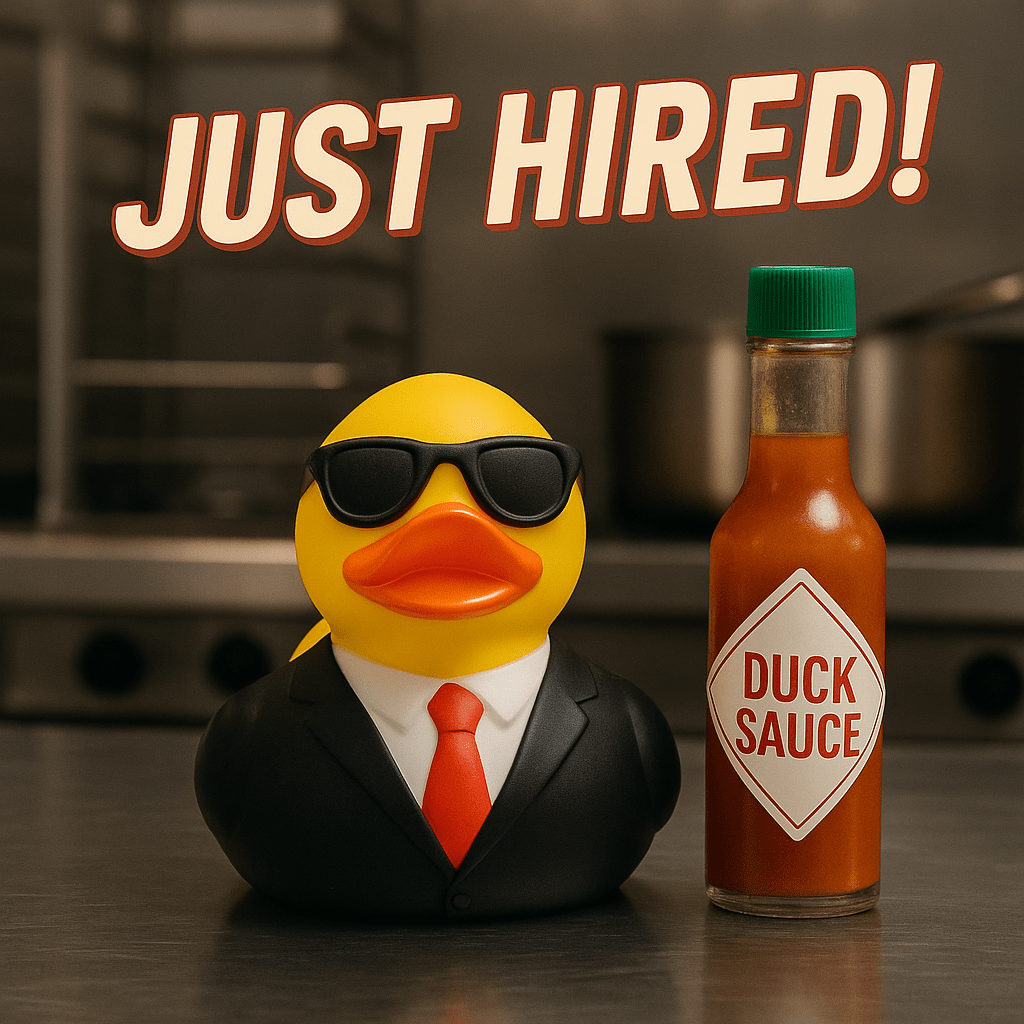
Indeed, it’s been some time since my last article, and tonight — while my radio fires up some disco nostalgia taking me back to the days when I started this journey into headhunting — with the lights down low, I’d like to take the liberty (and the inspiration) to borrow that catchy title to discuss a crucial topic in recruiting. Not sure where the term “ Duck Sauce” came from, but while your brain screams “Barbra Streisand!” right now (don’t lie, I can hear you from here), let me dish out some food for thought and introduce you to the topic of the day. There’s something both funny and tragic about how some hiring managers approach candidate assessment. You can almost hear them shouting from the metaphorical kitchen door:
“Hey, Marco — cook me that candidate, medium rare, full of leadership flavor, and make it quick!”
The problem? People aren’t dishes. And as much as I love cooking, I’m not grilling or dressing white collars for a living. Simply put: assessment isn’t a takeaway order.

Finding the right person for a senior role is more like cooking a complex recipe — it takes ingredients, heat, timing, and judgment. You can’t just throw things together and hope the sauce covers the flaws. That’s where my favorite recruiting recipe — The Duck Sauce — comes in. It’s the balance between three key ingredients: technical skillset, chemistry, and reputation. Each one matters, but together, they make the difference between a dish that satisfies and one that gives everyone heartburn.
Ingredient One:
The Technical Skillset — The Protein
Every recipe starts with the main ingredient. That’s the technical skillset — the tangible assets, the duck, if you like. The résumé. The experience. It’s what everyone sees and what most hiring decisions are based on.
But here’s the catch — having duck doesn’t mean you can cook.
It comes with a series of fancy labels: educational background (usually an Ivy League or top school), business credentials, career highlights, glossy brand names of employers, and a list of achievements, sales records, and awards. If you asked an AI to create an image of a candidate based on their CV, it would produce an army of identical perfect people — tall, shiny, pinstripe superheroes ready for a leadership magazine cover. Nothing could be further from the truth.

The technical side is the easiest to evaluate and the easiest to overrate. Yes, someone might have led a billion-dollar business line, managed global teams, or designed the next big payment system. But technical ability alone doesn’t tell you whether they understand context, whether they learn, or whether they collapse under pressure. Beyond the competence aspects, there are other “tangible” assets that can be traced from the résumé — especially in Japan. I call them the Japan Specials: those market-specific, illogical but very real details that shape careers here.
I’ve seen candidates hired with a BA in English, unable to speak fluent English, working as bankers — simply because they came from Todai, Keio, or another top university. In other cases, what separated a rockstar candidate from the chosen one was something absurdly simple — a shared university sports club with the hiring manager.
Technical skill is the protein — the foundation. But unless you know how to season and cook it properly, it’s just meat on a plate.
Ingredient Two:
The Chemistry — The Seasoning and the Heat
Now, this is where most recipes — and hiring processes — fail.
Chemistry is the invisible ingredient, the balance of flavors that makes or breaks everything. It’s how a person’s rhythm, energy, and values blend with those of the team and leadership.
The workplace is where we spend around 60% of our lives, and no one wants to spend that time with idiots, toxic complainers, or negative downers. Those destroy team spirit, poison the environment, and make even the best jobs unbearable. Too little chemistry, and you get a bland dish — someone who never really connects. Too much of the wrong kind, and you burn the whole kitchen.

The challenge is that chemistry takes time to read. It’s not about small talk or shared hobbies. It’s about emotional intelligence, adaptability, curiosity, and timing. You can’t rush it, and you can’t fake it. Unfortunately, most interviews are performances. Both parties are at their best — the candidate trying to impress, the hiring manager eager to tick the box. I firmly believe that chemistry is the driving force that decides whether a hire becomes a success or a disaster. And it often hinges on random factors — a handshake, a haircut, or simply someone’s mood that day.
As a romantic, analogue recruiter, I’m not a big fan of Zoom or Teams interviews. Not only because I hate being on screen, but because virtual meetings kill — or at least dilute — human interaction. You can’t read body language, energy, or those micro-signals that tell you who’s really in front of you. I understand why people love working from home (especially HR), but in my recent experience, several clients have confessed regrets after hiring people based solely on video interviews. They couldn’t get a “real-life read.”
And yes, I’ve made bad calls too — even the best chefs burn a dish once in a while. The point is, you learn to taste better after every mistake. Hiring managers often skip this step because it’s messy and subjective. But that’s exactly why it matters. The best chefs taste as they cook — they don’t rely on the recipe alone. You should do the same when evaluating a candidate.
Ingredient Three:
The Reputation — The Sauce That Lingers
Ah, the duck sauce itself — sweet, tangy, and impossible to ignore.
This is reputation: the aftertaste that stays once the interview is over. It’s what people say when the candidate’s name comes up at lunch, in corridors, or during those off-the-record calls that reveal more than any reference letter ever will. The back is as important as the front.
What’s heard through the grapevine helps build a person’s true brand equity. In a tight business community, a genuine, responsible sanity check can save the day — and sometimes, entire businesses.
Everyone in this market has history. Everyone has nicknames. There are official narratives, cover stories, red light specials and whispered truths about nearly every banker in Marunouchi, Otemachi, and Roppongi. And where does all that buzz circulate? The coffee tables. People talk. They complain about their bosses, rivals, and even their partners! ( Yes, I hear loads of stories of unhappy wives and husbands, miserable social lives and unreasonable requests to find those people not only a job, but also new partners … but that’s another story) .
They gossip out of boredom or envy, sometimes both — what I like to call “gossip-au-lait.”

And that’s where headhunters like me live — in those coffee shops, listening.
Because when you sit long enough, you hear it all: the triumphs, the blunders, the comebacks, the stories told when no one’s recording. If I had a dollar for every secret agenda I’ve overheard, I’d be retired on a beach by now. But here’s the line I’ll never cross: we don’t trade gossip — we watch it.
Reputation is not a rumour; it’s the market’s collective verdict. It’s the unspoken due diligence that protects organizations from costly mis-hires. And yet, when a hire goes bad, guess who gets blamed first?
The Recruiter: always.
Apparently, we should’ve known the duck would turn out dry — even if the client ordered it that way.
So my advice to hiring managers: do a proper sanity check. Look at both sides of the candidate — the polished front and the hidden back. Avoid the dark corners that can trigger collateral damage to teams, reputations, or entire businesses. Lastly, never really trust 100% background check referees: as they are usually being appointed by the candidates, will never provide an objective perspective on the person you are hiring. Check always the street talks, but read both sides of each story carefully , and do your own math, avoiding influence from others.
Bringing It All Together:
The Assessment Recipe
A great candidate assessment, like a great dish, is about balance.
- The technical skillset provides structure.
- The chemistry brings connection.
- The reputation ensures you’re not serving something that looked good on paper but leaves a bad taste in everyone’s mouth.
You can’t skip steps. You can’t microwave experience. And you definitely can’t season personality after serving. The tragedy of modern hiring is that everyone wants to eat fast — but nobody wants to cook slow. They chase efficiency, and in doing so, they trade away discernment.
So here’s the golden rule of Recruiting Duck Sauce:
If you don’t have time to assess properly, you’ll have plenty of time later to regret it.
Assessment isn’t paperwork; it’s a sanity check that protects your team, your brand, and your credibility.
Because the truth is — any chef can follow a recipe. But only a few can taste the dish and know whether it’s truly right. And in the end, behind every good hire, there’s instinct — that unspoken rhythm that no algorithm will ever decode.

 The Banking Insider